

As we approach the 250th birthday of the United States, homeschooling offers families many excellent and unique ways to explore the story of our nation’s founding—while also giving students the chance to learn how to spell semiquincentennial!
As a history buff and homeschooling mom, I’m always on the lookout for kid-friendly educational field trips and activities. So I’ve gathered a few ideas to get you started. Please note that not everything listed may be appropriate for your family. You can review websites to decide if something is a good fit.
Engage with the founding documents
The values undergirding our country and system of governance are expressed through three primary documents—the Declaration of Independence, the Constitution, and the Bill of Rights.
You can visit the National Archives in Washington, DC, to see these documents that make up the United States Charters of Freedom in person.
Not able to visit? Check out the archives online for some terrific educator resources and discussion ideas.
Older elementary students might be able to read these documents, but may need the words translated into “plain English.” For younger elementary students, you can stick to reading and explaining key phrases or concepts. For example, discuss the opening lines of the Declaration of Independence, which offer a rich and thorough introduction to the moral and political values that we still cherish today.
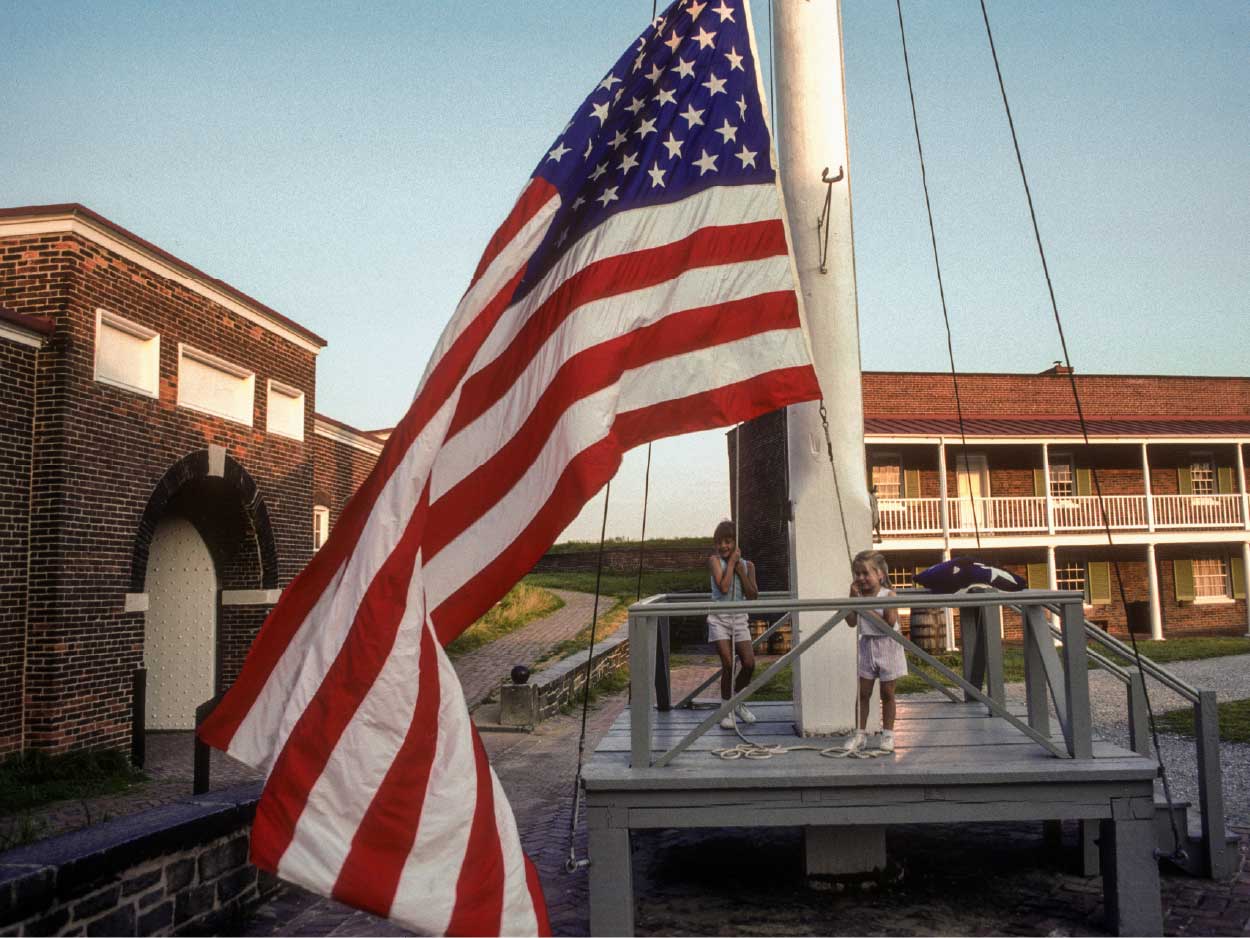
Raising the flag at Fort McHenry in Baltimore
Middle and high school students can take a deeper dive into different historical interpretations of these concepts and how they’ve developed over time. Or, if you want to stick to the founding period, you can read select Federalist and Anti-Federalist papers to learn about the various perspectives and arguments that shaped our Constitution.
In addition to reading these founding documents, you can also read letters and papers from influential people of the founding period, ranging from George Washington to Abigail Adams.
Co-ops with 10 or more students can interact more directly with civics through the National Archive’s live distance learning programs. Age-appropriate modules are offered for grades K–2, 3–5, 6–8, and 9–12.
Kiddle has a number of “Facts for Kids” pages related to the founding documents. Look up US Constitutional Convention, Federalist Papers, Declaration of Independence, and more to find kid-friendly overviews.
Explore important historical places and parks
Field trips make history come alive! If you live east of the Mississippi, chances are there’s at least one historical landmark related to America’s founding that you can visit. Touring churches, buildings, battlefields, and the homes of key historical figures gives context for understanding the events of the founding and the people who devoted their lives to establishing our nation’s freedom.
Places to go: Independence Hall (Pennsylvania), Freedom Trail (Boston), Mount Vernon and Monticello (Virginia).
You don’t have to limit yourself to the colonial period. Visiting monuments and historical paths dated post-1776 can help solidify how our country has actually lived out its founding ideas.
Places to go: Washington, DC, the homes of US presidents and founding figures, Baltimore Harbor, the Lewis and Clark trail, the Trail of Tears, the Oregon trail, the Alamo, Arlington National Cemetery, Gettysburg, the Statue of Liberty, the National Civil Rights Museum, Pearl Harbor, and the 9/11 memorials.
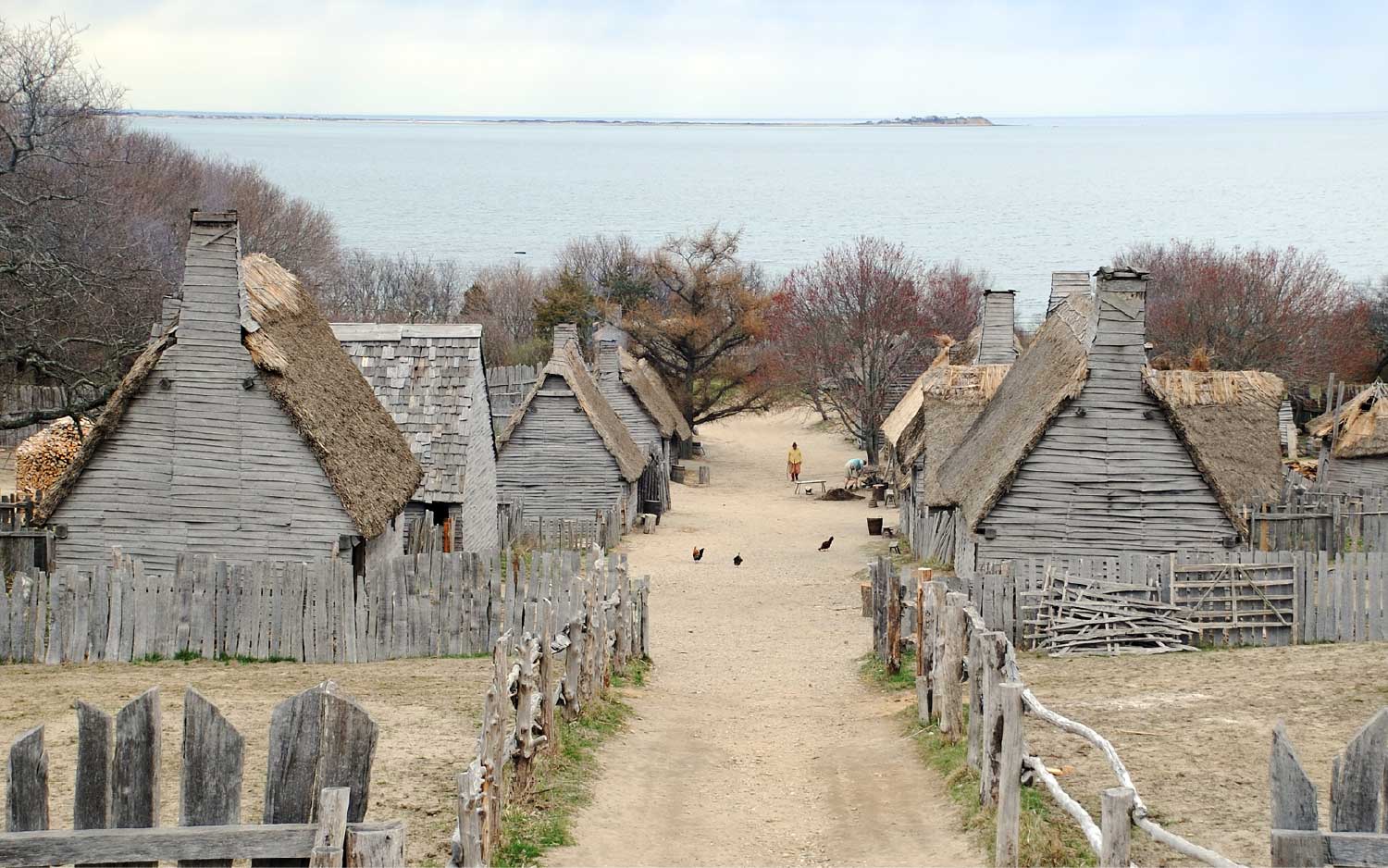
Plimoth Plantation
For a truly immersive experience, visit a living history museum. My family loves going to Colonial Williamsburg in Virginia, but lots of places let you get hands-on with a particular historical period of our country:
- Plimoth Plantation (Massachusetts)
- Mystic Seaport (Connecticut)
- Oconaluftee Indian Village (North Carolina)
- Conner Prairie (Indiana)
- Ozark Folk Center (Arkansas)
- Columbia State Historic Park (California)
- Boot Hill (Kansas)
- Ellis Island (New York)
- Greenfield Village (Michigan)
Find a list of living history museums on Wikipedia. TIP: Several of these places have Homeschool Days with discounted events geared to homeschooling families. Check websites for details.
You can also visit a national or state park and witness both the beauty of God’s creation and our country’s unique geography. Many parks have less well-known, but still impactful historical monuments. Check park websites for special events.
Build create, perform, play, and read
Tap into your children’s creativity by recreating various historic scenes or iconic American buildings using Legos, cotton balls, sugar cubes, or popsicle sticks. Mold the Statue of Liberty or the face of a favorite American out of playdough or air-dry clay.
Taste history! Find historical or cultural heritage recipes and try making some with the kids. Bonus if it’s a recipe from outside the region where you live. Research how different foods played a role in the development of a region (i.e., citrus groves in California and Florida).
Explore your local and state history. Find out when your town incorporated and under what circumstances your state joined the Union. Talk with your children about how your family might have lived during this period. Visit any relevant historical sites.
Have a budding writer? Ask them to write a short story about a Revolutionary War era event as though they were an eyewitness.
Host a Liberty Tea and read aloud the Declaration of Independence or Patrick Henry’s “Give Me Liberty” speech. (Bonus fun: Dress in period clothing and serve a period-appropriate tea spread.)
Play! Uncovering Loyalties is a free educational video game for grades 3–6 that puts kids at the center of pre-revolutionary Virginia.
Historical novels and narrative nonfiction are also excellent ways for kids to understand the past. For elementary readers, my 10-year-old enjoyed reading Toliver’s Secret by Esther Wood Brady and George Washington’s Teeth by Deborah Chandra.
Kids age 12 and older will find Johnny Tremain by Esther Forbes exciting, and DK’s The American Revolution: A Visual History will provide them with visual context for events during the war and cultural details like weapons, uniforms, and tactics.
For an extensive list of children and young adult books relating to America’s fight for independence, visit the children and young adult section of the Revolutionary War Journal online.
Enter America’s Field Trip Contest
Children in grades 3–12 can share their perspective on what America means to them for a chance to win an incredible trip to our nation’s most iconic landmarks. Enter the contest at america250.org/fieldtrip. The deadline is March 30, 2026.
Volunteer and celebrate at a semiquincentennial event
Celebrate with your community. America250.org has a list of events, parades, and other celebrations happening in your state. (Find it under “Our Partners,” then “State and Territory Commissions.”) Many of them are still looking for volunteers.
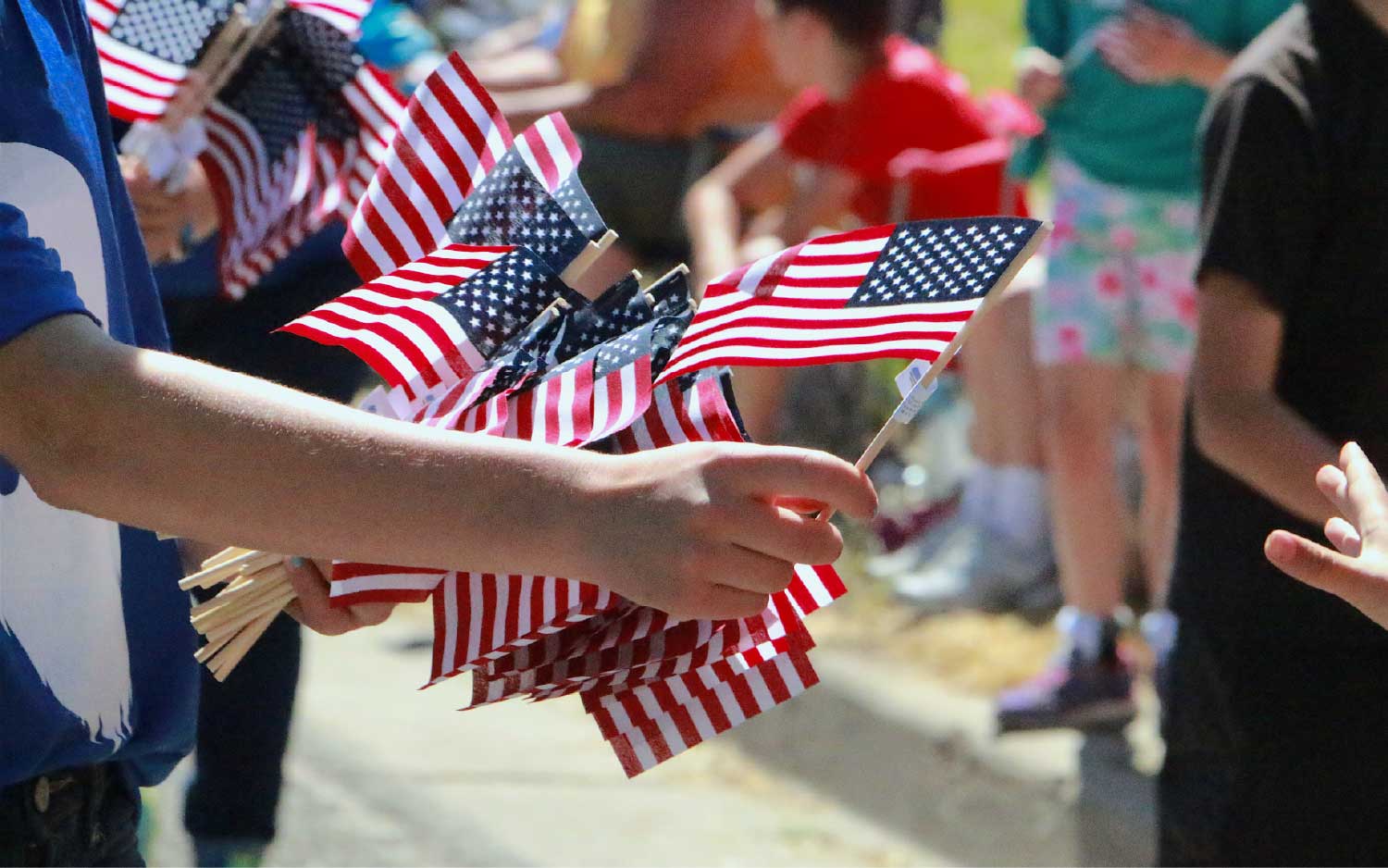
Handing out flags at a parade.
If you don’t find an event locally and you have an enterprising spirit, consider organizing one. Local chapters of civic organizations, state historical societies, and libraries can be good resources and help get the word out.
Regardless of how you choose to celebrate our country’s 250th birthday, we hope that you and your children find a way to take advantage of this special moment in history.
May we all continue to “form a more perfect Union, establish Justice, insure domestic Tranquility, provide for the common defence, promote the general Welfare, and secure the Blessings of Liberty to ourselves and our Posterity.” (Preamble to the US Constitution)